

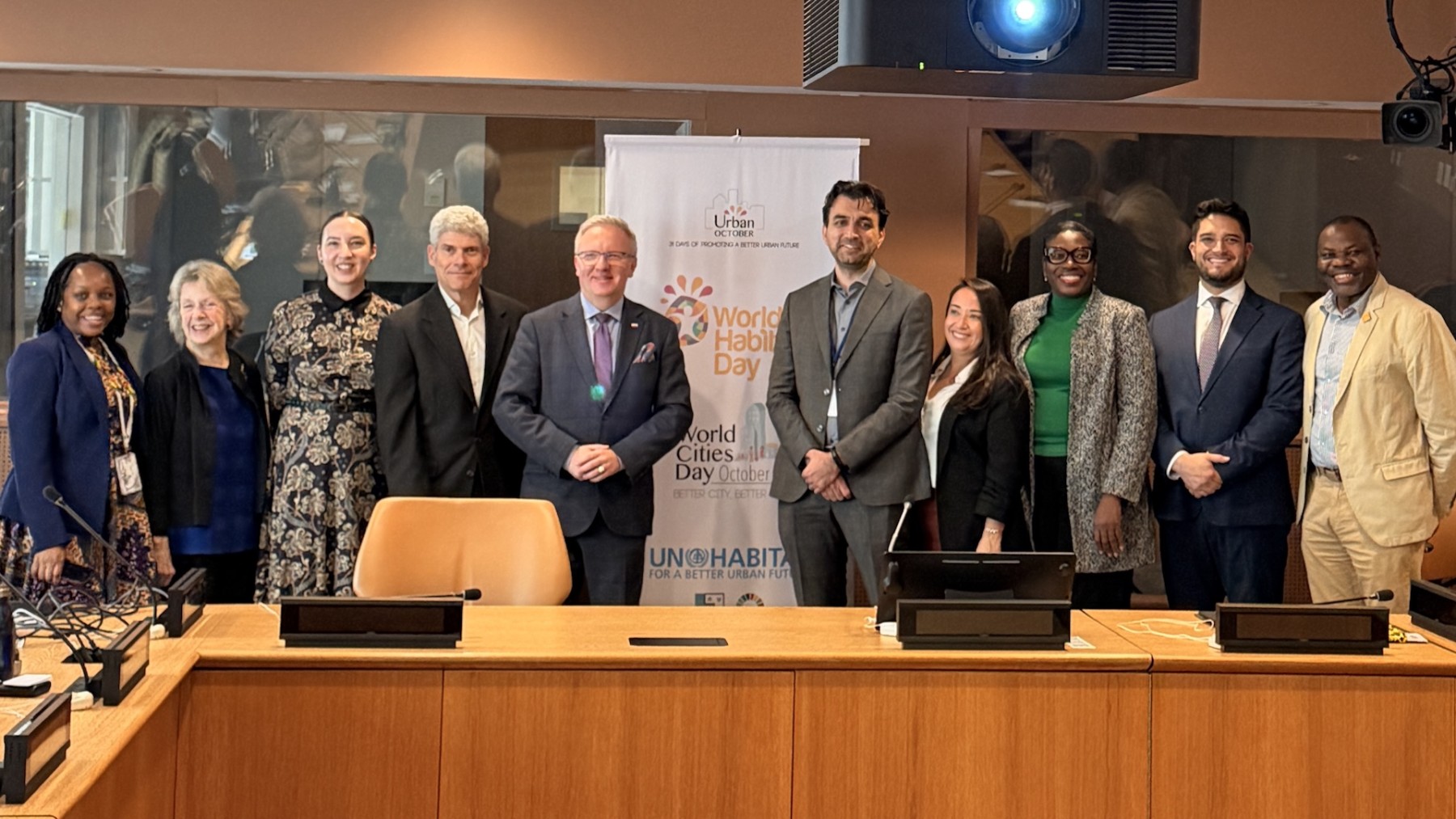
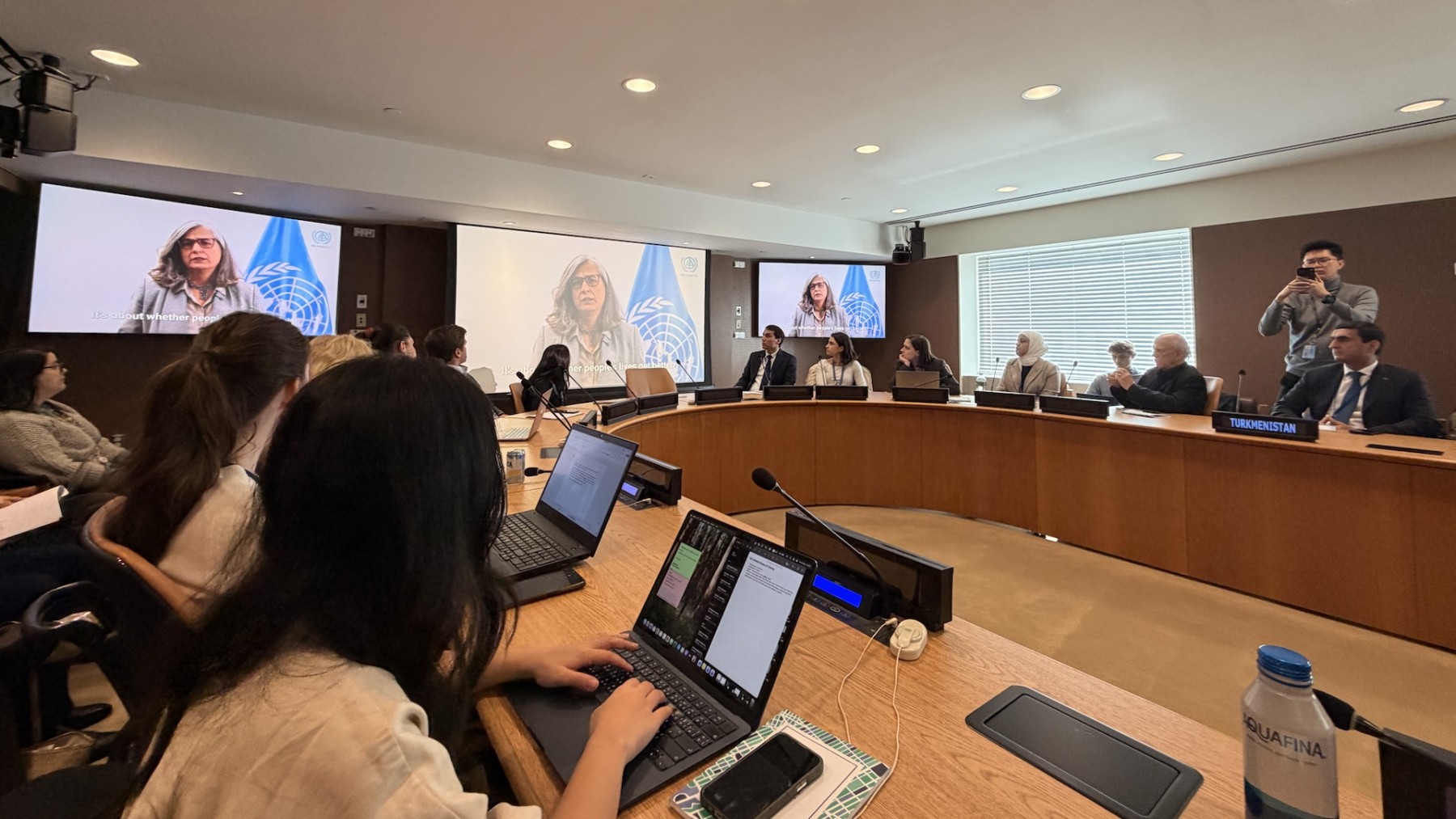
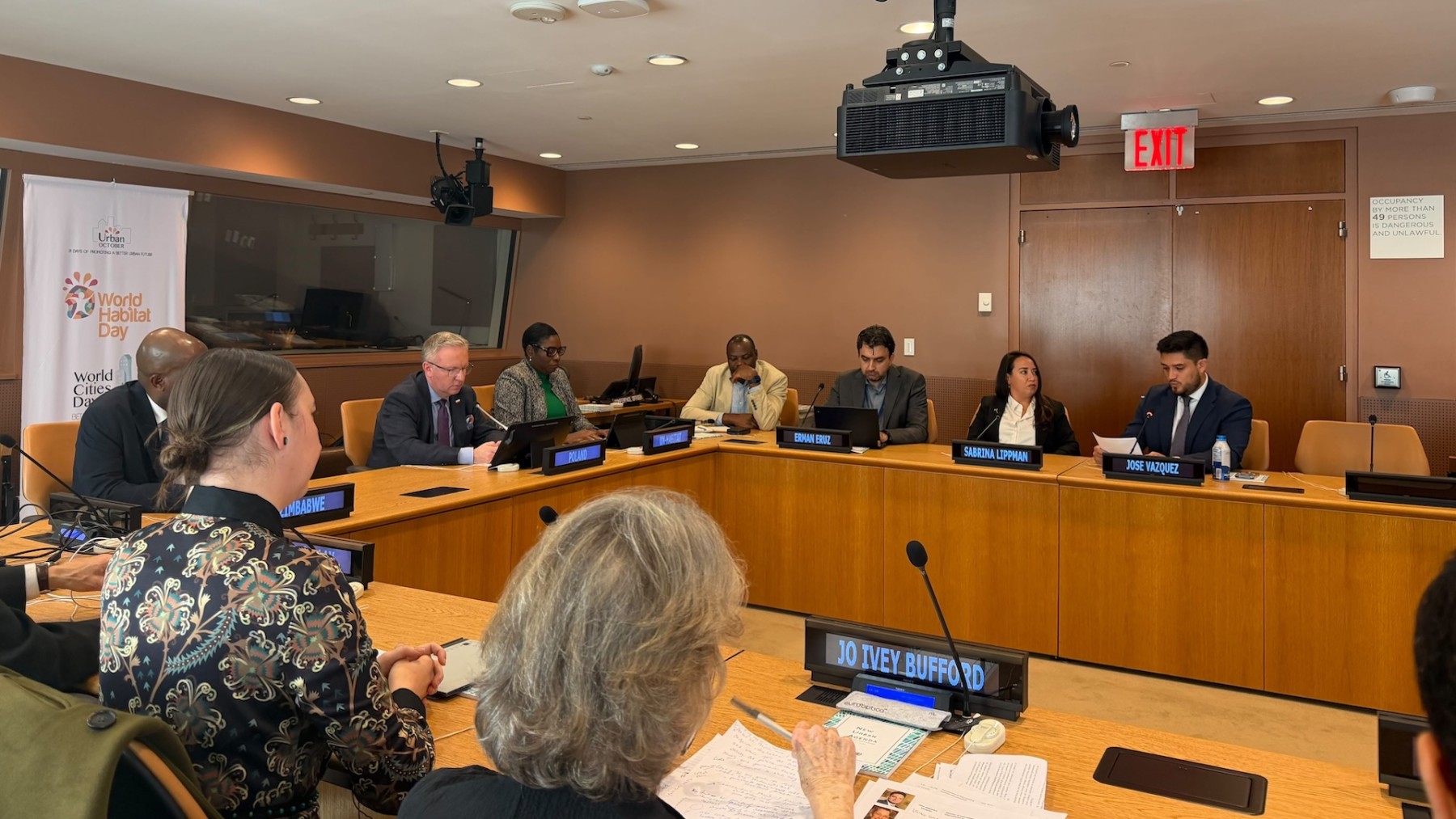
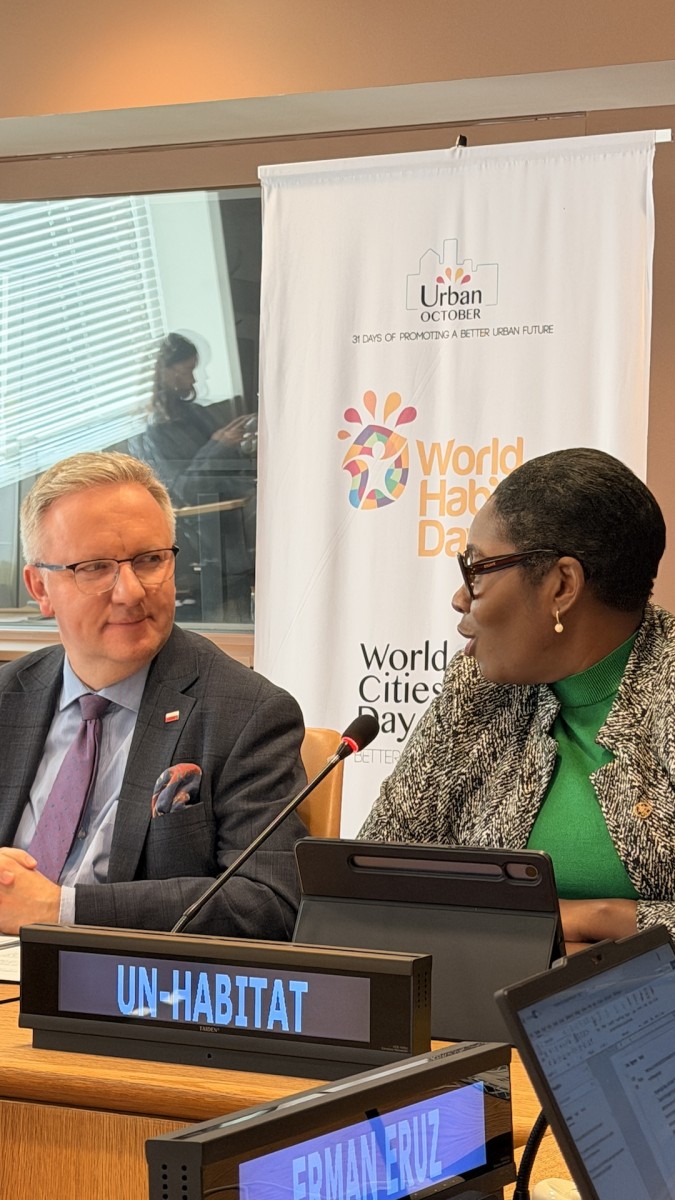
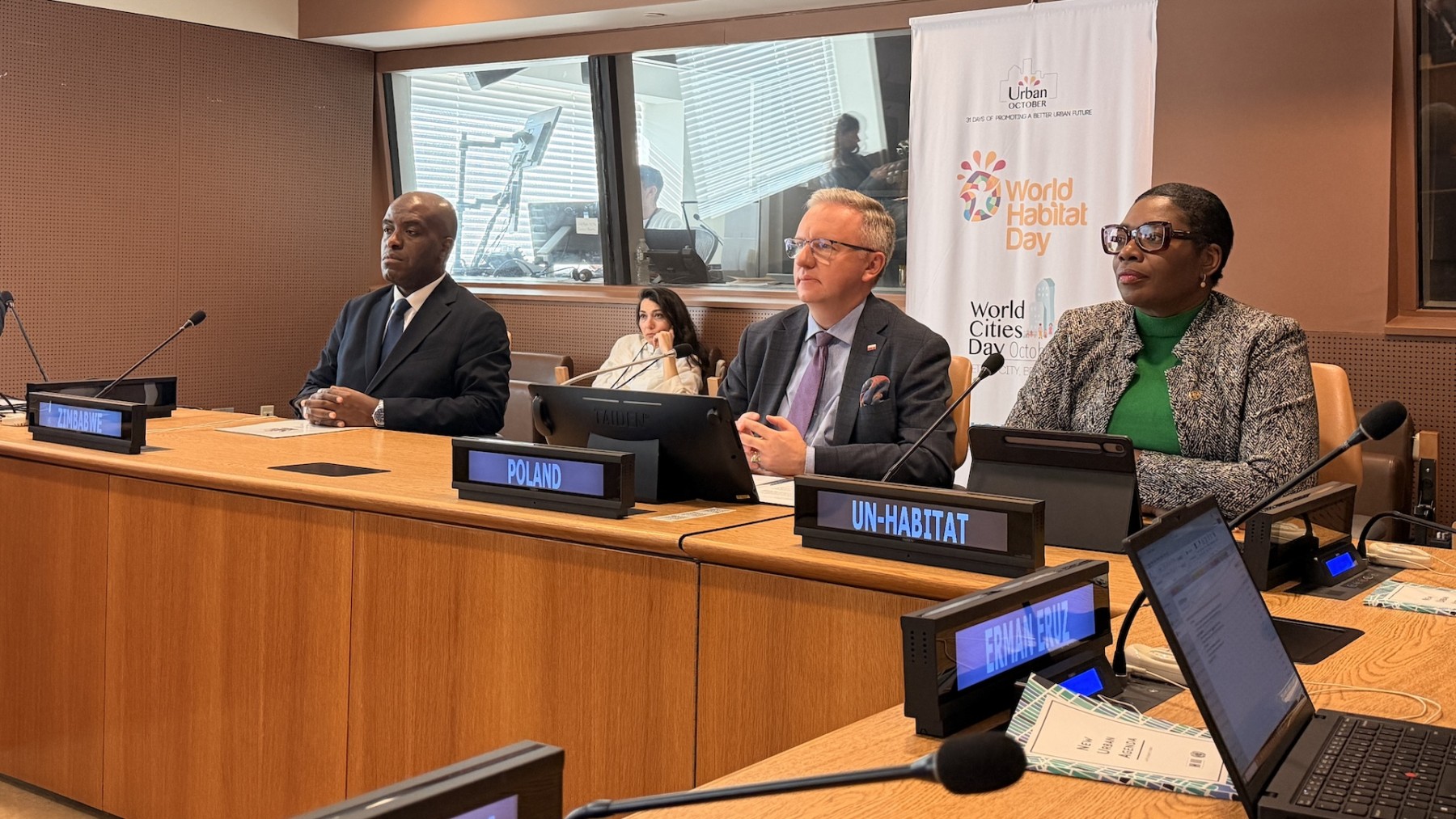
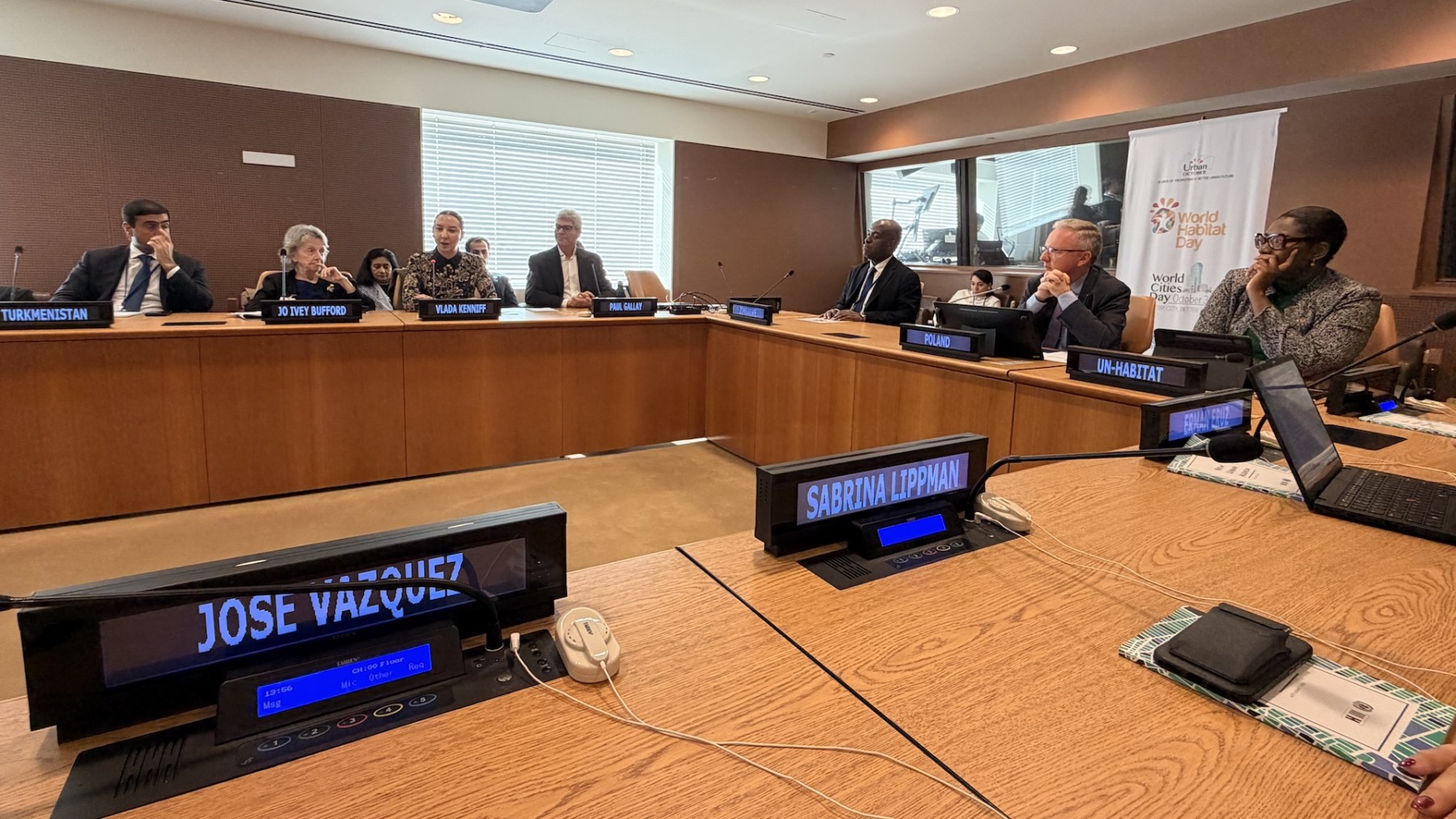
The dialogue, held in Conference Room 9, was co-chaired by H.E. Ambassador Krzysztof Szczerski, Permanent Representative of Poland, and H.E. Ambassador Taonga Mushayavanhu, Permanent Representative of Zimbabwe. Toni-Shae Freckleton, Director of the UN-Habitat New York Liaison Office, gave the framing presentation. Practitioners from the private sector, academia, civil society and housing finance then addressed three guiding questions on how urban regeneration can deliver adequate housing, unlock investment and scale community-led solutions.
It is a date IFFD knows well: the Federation has observed World Cities Day at the UN every year since 2017.
The family as the first community
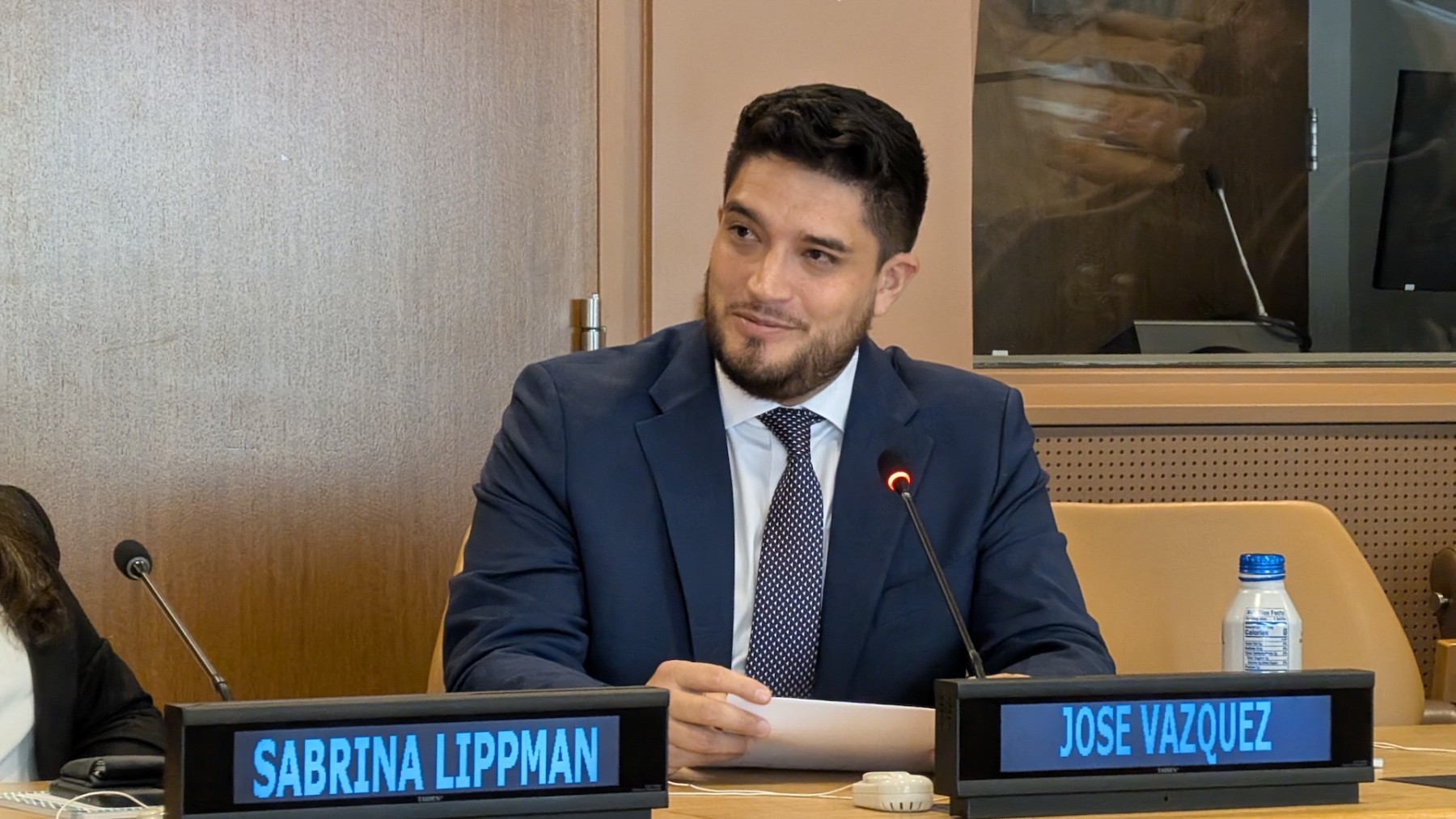
Speaking on the panel, José Alejandro Vázquez, IFFD Director of International Relations, answered the question of how cities can scale community-led solutions. “From where we stand, the first community in any city is the family,” he said. “When policies work for families at every stage of life, they work for neighbourhoods, for every member of the family and for all social groups.”
He presented the Venice Declaration, the centrepiece of IFFD’s initiative Inclusive Cities for Sustainable Families. Updated in 2023, it sets out ten points for family-friendly cities, from housing, education and healthcare to safety, transport and support for families in vulnerable situations. More than 260 regions, cities and territories have signed it, in Poland, Italy, Spain, France, Greece, Austria, Mexico, Colombia, Brazil and Argentina. Vázquez thanked UN-Habitat for its partnership since the beginning, and the Region of Veneto and UN-DESA as initial promoters.
Signatories report on their progress every year. The 2026 Monitoring Report gathers 58 good practices from 19 signatories in 6 countries:
• 24 support the family as a whole, especially families in vulnerable situations
• 16 support older persons and persons with disabilities
• 15 focus on care, including home care, day care, childcare and support for family caregivers
• 12 invest in children and youth
Others support parents as primary caregivers and protect women and single mothers. In line with the Baku call to action on housing, signatories are also advancing affordable, subsidised and co-housing solutions. Most, Vázquez stressed, are not top-down programmes but are built with local associations, schools, volunteers and families themselves.
Designing intergenerational cities
Vázquez described how needs shift across the life of a family. Young families need childcare close to home or work and safe streets. Established families need time, through flexible work and reliable transport. Families caring for an older parent need respite, home care and housing that can adapt.
Regeneration that treats these needs as separate silos, he argued, leaves families to stitch the city together on their own. Designing for all of them at once, with intergenerational housing, shared services and places where generations meet, builds resilience into the urban fabric itself.
Scaling through peer learning
To scale what works, IFFD runs the Good Practices Platform, the first of its kind for local family policies in urban settings, with more than 280 practices shared since 2016. “A solution that works in one city should not have to be reinvented in another,” Vázquez said, calling peer learning between local governments one of the fastest and least costly accelerators of the New Urban Agenda.
He pointed to health as the next frontier, noting a clear rise this year in practices on mental health, healthy ageing and care at home. In the Austrian State of Carinthia, community nurses and social workers, supported by local volunteers, visit older residents and their family caregivers so older people can stay independent and connected.
The panel continued with Prof. Jo Ivey Boufford of the NYU School of Global Public Health on building healthier cities for every generation, followed by an interactive dialogue with Member States.
The International Federation for Family Development works in 68 countries across five continents to put families at the centre of public policy.