
How do we better protect the most vulnerable?
Four student research teams in four countries
show where family-centred approaches
make a measurable difference
and where the gaps remain
From fieldwork to the United Nations,
this is where research becomes advocacy,
and advocacy becomes change

IPC – Facultés libres de philosophie et de psychologie
70 Avenue Denfert-Rochereau, 75014 Paris
24-26 August 2026
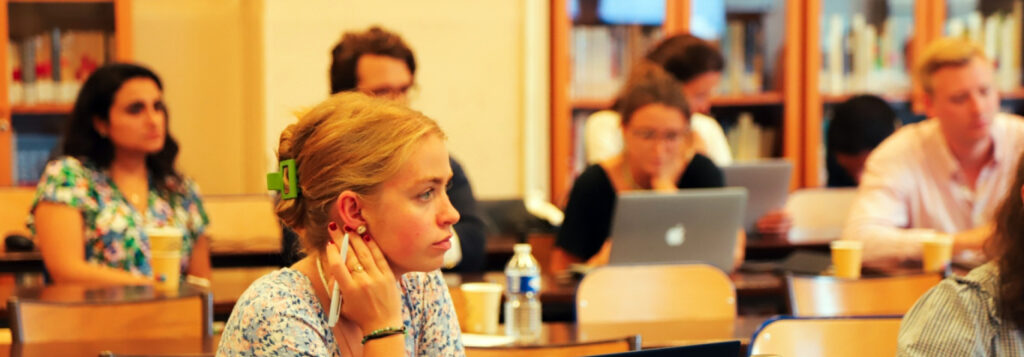
Across Europe, social services are under pressure that grows with each passing year. Child protection agencies are stretched thin. Mental health services face waiting times measured in months, not days. Care systems for the elderly and people with disabilities are strained to their structural limits. Social assistance programmes, designed as safety nets, are increasingly carrying the weight they were never built to hold. The European Commission, Eurostat, the OECD, and the Council of Europe have all documented this trajectory in detail, and national research bodies across the continent have confirmed it at the local level. The numbers are consistent. The trend is not reversing.
When families are strong, fewer people fall through the cracks.
When they weaken, social services pay the price. It is time to act on the evidence.
Yet behind these figures lies a structural reality that policy debates rarely name directly: the gradual weakening of the family as the primary unit of social solidarity. This is not a nostalgic observation. It is a practical one. When families are stable and supported, they provide what no public institution can fully replicate — daily care, emotional continuity, long-term accompaniment through difficulty, and the quiet but essential transfers of support between generations. When families struggle — through poverty, breakdown, isolation, illness, or simple lack of community — the state must step in. And no state system, however competent or well-funded, can substitute for those bonds in full. The data make this visible: rising rates of family breakdown, growing numbers of children in alternative care, increasing proportions of elderly people without close family networks, and adults navigating hardship alone.

Investing seriously in families is not a conservative talking point or a values-laden preference.
It is an evidence-based response to social vulnerability — one that deserves to sit at the centre of European social policy.
It is a rare opportunity to see the full chain — from months of fieldwork in four countries, to the advocacy rooms of international institutions, to the concrete question of how policy can be shaped in favour of families and those who depend on them. Whether you come as a student, a researcher, an NGO professional, or a policymaker, your expertise and your perspective belong in this conversation. We invite you to engage fully — and to leave better equipped to turn knowledge into change.
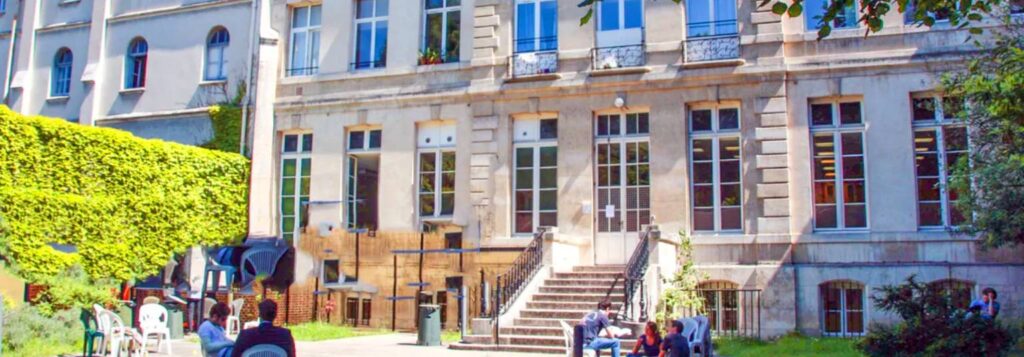
IPC — Facultés Libres de Philosophie et de Psychologie — trains students in philosophy, psychology, and the social sciences with a strong emphasis on applied knowledge and ethical engagement with the world. This Erasmus+ programme organized with IFFD is a direct expression of that mission. It is designed to close the gap between research and impact — to give students real experience of how knowledge is gathered, analysed, and then transformed into advocacy that reaches policymakers.
HISTORY
More than 500 students and young professionals from 39 countries have attended the first 13 editions of the IFFD Annual Advocacy Workshop.
Up to now, they have taken place in Madrid, Budapest, Paris, Mexico City and Warsaw.
The are part of the IFFD Advocacy Training Project.
TARGET
Oriented to entry-level professionals or students of social sciences or a related field who have a strong interest in family policies and want to gain experience in the work of international organizations.
A certificate is provided to each participant upon attendance of at least 85% of the sessions.
Active participation will be highly recommended.
The Workshop has no cost for participants, though there is no financial assistance available for travel or accommodation expenses.
FOCUS
Participants delve into the topics, focusing on poverty eradication, employment generation, and social integration, and explore strategies for achieving these goals in the global context.
CONTENTS
Despite the diversity of national settings and populations, the four programmes come together around six cross-cutting themes. These themes give the programme its comparative strength.
1. From Institution-Centred to Person- and Community-Centred Models
The tension between institutions and communities is at the heart of all four projects, though it looks different in each setting.
2. Collecting Authentic Testimony from People in Situations of Institutional Dependence
Each field site involves the direct participation of the people affected by the policies being studied, while adapting its methods to the vulnerability of those populations.
3. The Family as an Active Player, Not Just a Background Factor
In line with IFFD’s family perspective, all four projects treat the family not as a passive backdrop but as a full participant in protection and care systems.
4. Complex Multi-Stakeholder Governance
Analysing these governance structures is one of the programme’s most important comparative contributions. Public, voluntary, church-based, and private actors all coexist and try to coordinate — sometimes successfully, sometimes not.
5. Anchoring in International Legal Standards
The four projects draw on different but complementary international legal frameworks. Comparing these different legal anchors will show how the same UN conventions are applied differently across national contexts. It will also show how field research can feed into IFFD’s work at UN commissions (CPD, CSoCD, CSW, CRC).
6. Methodology Under Constraint
All four studies share the same structural constraint: 50 days of fieldwork, mixed methods, and vulnerable populations. This shared constraint creates a rich basis for methodological comparison. How do you combine document review, interviews, focus groups, and quantitative data within such a tight schedule? How do you handle the ethical challenges that arise with each population — children in protection, people under legal guardianship, migrants, and the elderly? How do you guarantee data quality while complying with GDPR rules and adapted consent requirements?
From fieldwork to the United Nations,
this is where research becomes advocacy,
and advocacy becomes change.
PROGRAMME
The four projects share a common foundation that makes comparing them worthwhile:
- All are Erasmus+ KA2 Cooperation Partnerships with the same fieldwork duration.
- All use mixed methods — mainly qualitative, with a quantitative component — within a case-study design.
- All connect explicitly to United Nations legal standards.
- All reflect the family perspective that IFFD promotes at the UN.
OUTCOMES
The Advocacy Plan elaborated every day will be presented at the United Nations and European Union as part of IFFD’s advocacy. They answer the following questions:
- Establish measurable objectives.
- Define key messages.
- Determine the communication activities to deliver key messages.
- Decide what resources are necessary to complete each activity.
- Establish a timeline and a responsible party for each activity.
- Fix how to evaluate whether you have reached your objectives.
FEATURED STUDIES
This workshop is not built on theory alone. Four IPC student research teams, working within the Erasmus+ programme and deployed for fifty intensive days each, examine this reality in the field — in Carinthia (Austria), Malta, Veneto (Italy), and Valencia (Spain). They work inside the institutions that bear the direct weight of family weakening: child protection services, disability support systems, legal guardianship bodies, and community therapeutic services. Their findings are specific, localised, and concrete. They illuminate how different national systems are responding to the same underlying pressures, where family-centred approaches are making a measurable difference, and where gaps remain. These are not academic exercises. They are working contributions to an ongoing, urgent conversation about how Europe protects its most vulnerable citizens.
Towards a More Person-Centred Guardianship System in Valencia
This study provides a clearer understanding of whether recent reforms in support and care systems in Europe are genuinely helping vulnerable people to live with greater autonomy, participation, and dignity in their everyday lives. It identifies the practical conditions that make person-centred support effective, including the role played by institutions, professionals, and especially families. By combining the experiences of all of them, it aims to produce concrete recommendations to improve coordination, strengthen family support, and develop more humane and effective care systems. This is also why the results are intended to be transferable and useful for organisations and public authorities working to promote autonomy, inclusion, and rights-based support for people in vulnerable situations.
Evaluation of Community and Therapeutic Services
in Malta
This project provides a clear picture of how social and therapeutic support services function and how effectively they respond to the needs of vulnerable people. It studies how public institutions, charities, Church-related organisations, and private actors work together to support children and families, people struggling with addiction or mental health difficulties, persons with disabilities, the elderly, homeless individuals, and migrants. The research evaluates whether these services are accessible, well coordinated, and adapted to people’s real needs, taking into account the perspectives of both professionals and service users. It also identifies successful practices, current weaknesses, and emerging challenges associated with demographic change and rising social demands.
Mindset Towards Technology and Innovations in Care Work in Veneto
This research examines how digital technologies and innovations —particularly artificial intelligence—are perceived and experienced in the elderly care sector in that northern region of Italy. It explores the attitudes, levels of awareness, and needs of three closely connected groups: care workers, service users, and the relatives of users, with particular attention to the indirect perspectives of families as expressed through themselves, care managers and professionals. The findings show how these technologies are integrated into everyday work and care processes, and how they are understood and evaluated by those involved. It also compares the findings with evidence from other regions in Italy and from international contexts, to identify common trends, differences, and transferable lessons.
From Residential Institutions to Family and Community-Based Support in Carinthia
The work focuses on how the child protection system can move away from an institution-based model of care towards a system centred on prevention, families, and community support. It examines how social services in that part of Austria can identify key moments of risk—when a child or family is in difficulty but early intervention can still prevent separation or harm. The research analyses what interventions should look like in these situations, highlighting approaches that are child-centred, evidence-based, coordinated across services, and grounded in children’s rights. The aim is to understand how the system can shift from relying on residential care to strengthening timely support within families and communities, ensuring that children grow up in safe and stable environments whenever possible.