

Three-day workshop at Strathmore University produces a landmark implementation roadmap — with implications for the African Union and the global IYF+30 agenda
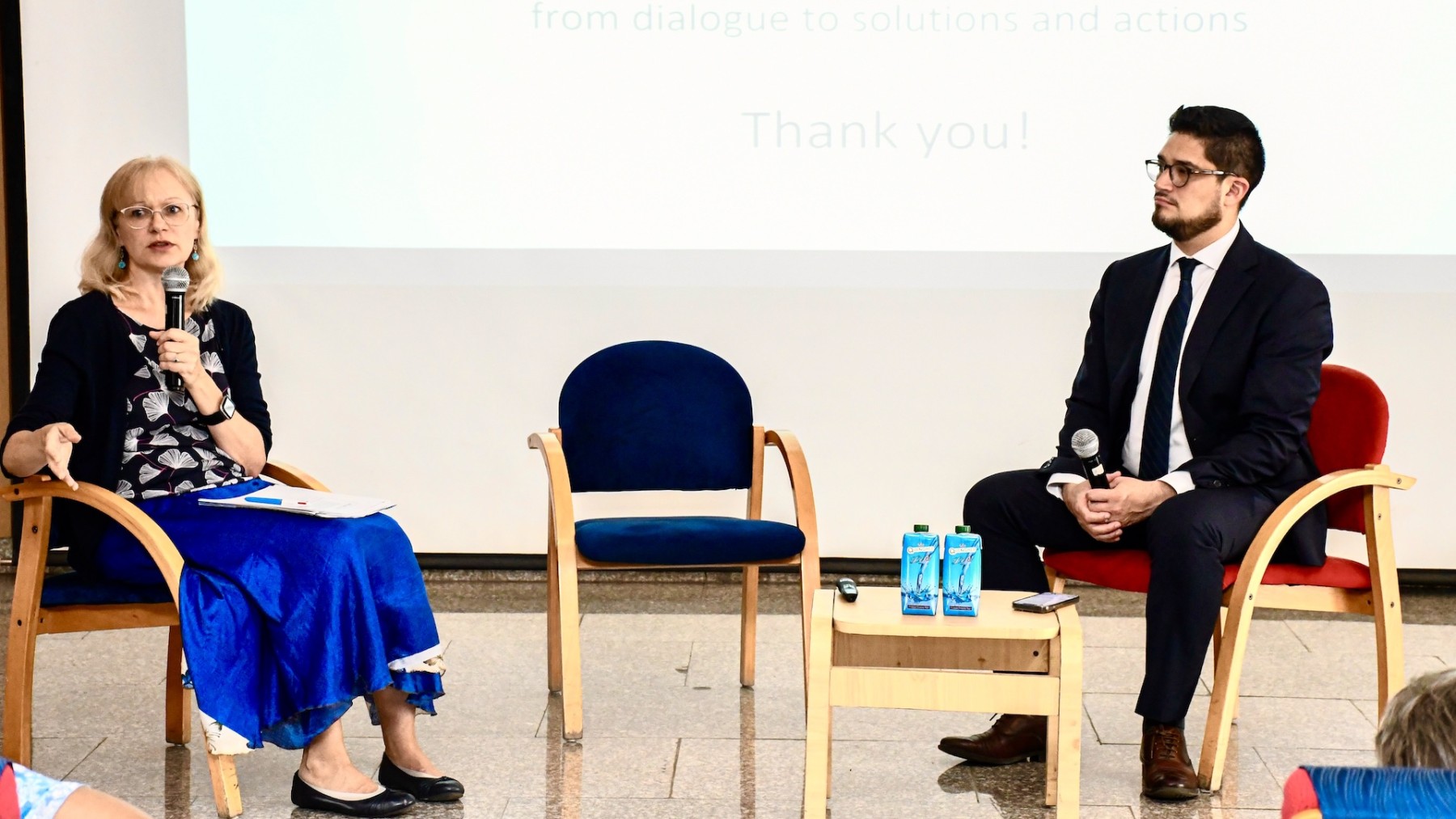
Nairobi, Kenya | March 24–26, 2026
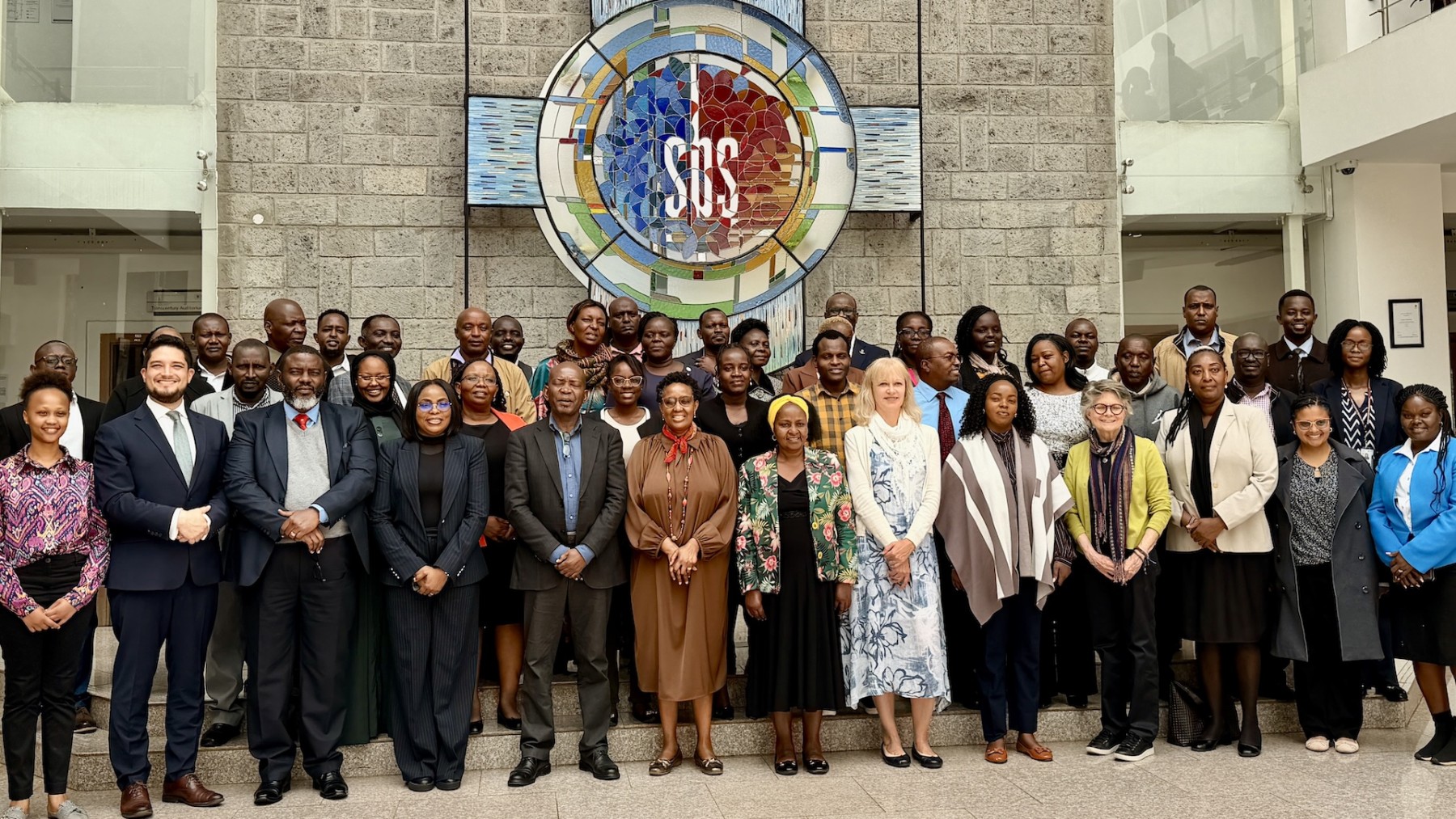
Kenya has taken a decisive step toward becoming the global benchmark for family-centered policy implementation. A three-day expert workshop held at Strathmore University Business School — convened by UNDESA, Strathmore University’s CROWF, and the International Federation for Family Development (IFFD) — produced the first collaborative draft of a National Action Plan for the Implementation of Kenya’s National Policy for Family Promotion and Protection.
Kenya is one of only two African countries with a dedicated national family policy.
The policy covers ten thematic areas, but until now implementation has clustered almost entirely around parenting, leaving nine areas unaddressed. The workshop’s purpose was to change that — and it did.
The timing is propitious. UN General Assembly Resolution A/RES/80/183 (2025) explicitly designates the 30th Anniversary of the International Year of the Family as a catalyst for national action plans. Kenya’s process responds directly to that mandate.
The People Who Built It
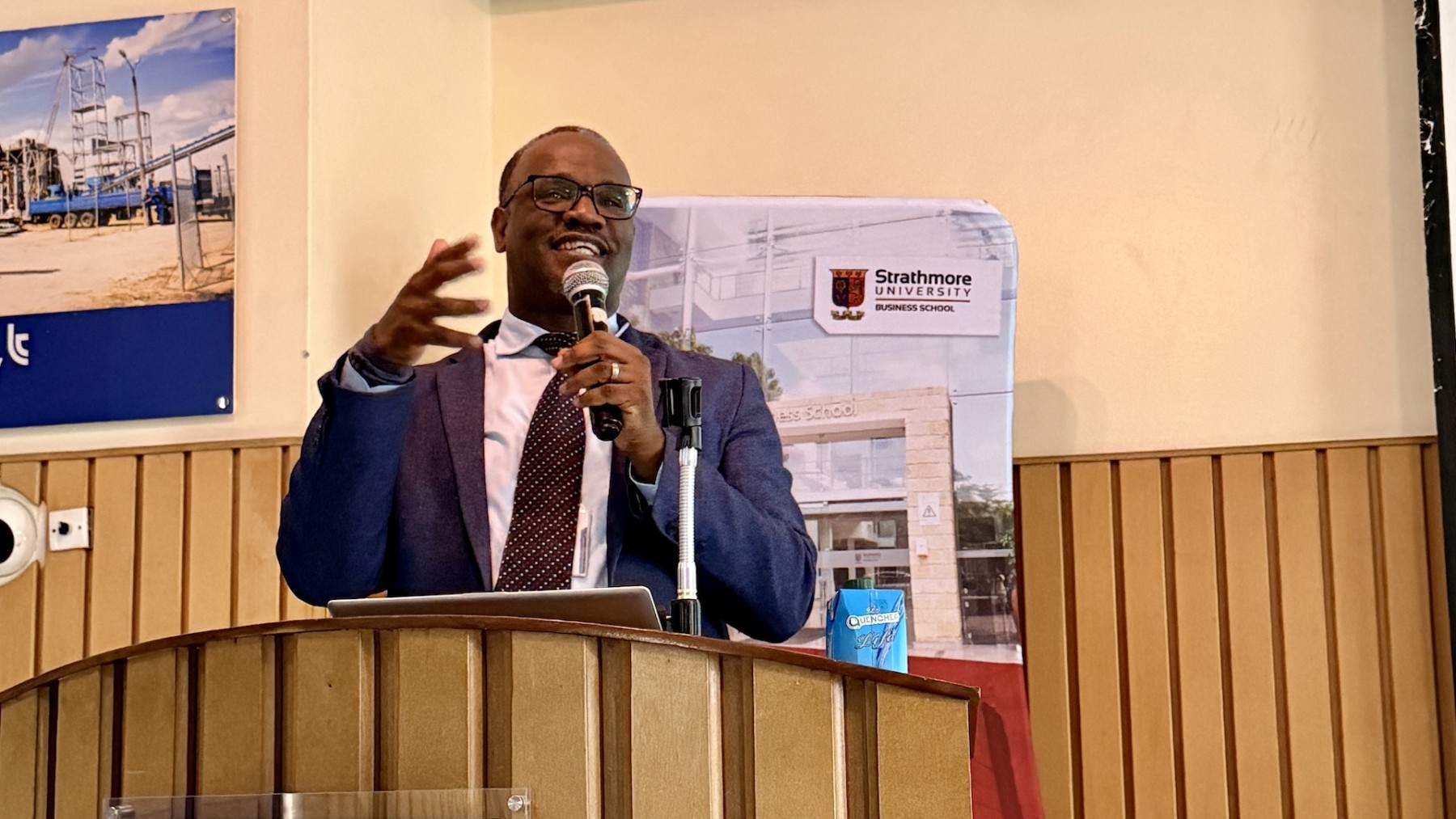
Dr. Caesar Mwangi (Strathmore Business School) opened the workshop not with ceremony but with personal testimony — eleven years spent living in a country where the systematic destruction of the family produced pervasive violence, crime, and social breakdown. His message was moral as much as institutional: the family is the first school, and getting it right is the precondition for everything else. He made clear that Strathmore is not a passive host — through CROWF, the Institute for Family Studies, the Programme for Family Development, parenting seminars for students and executives, and the Family Business Program, it has been an active partner in this agenda for a decade.
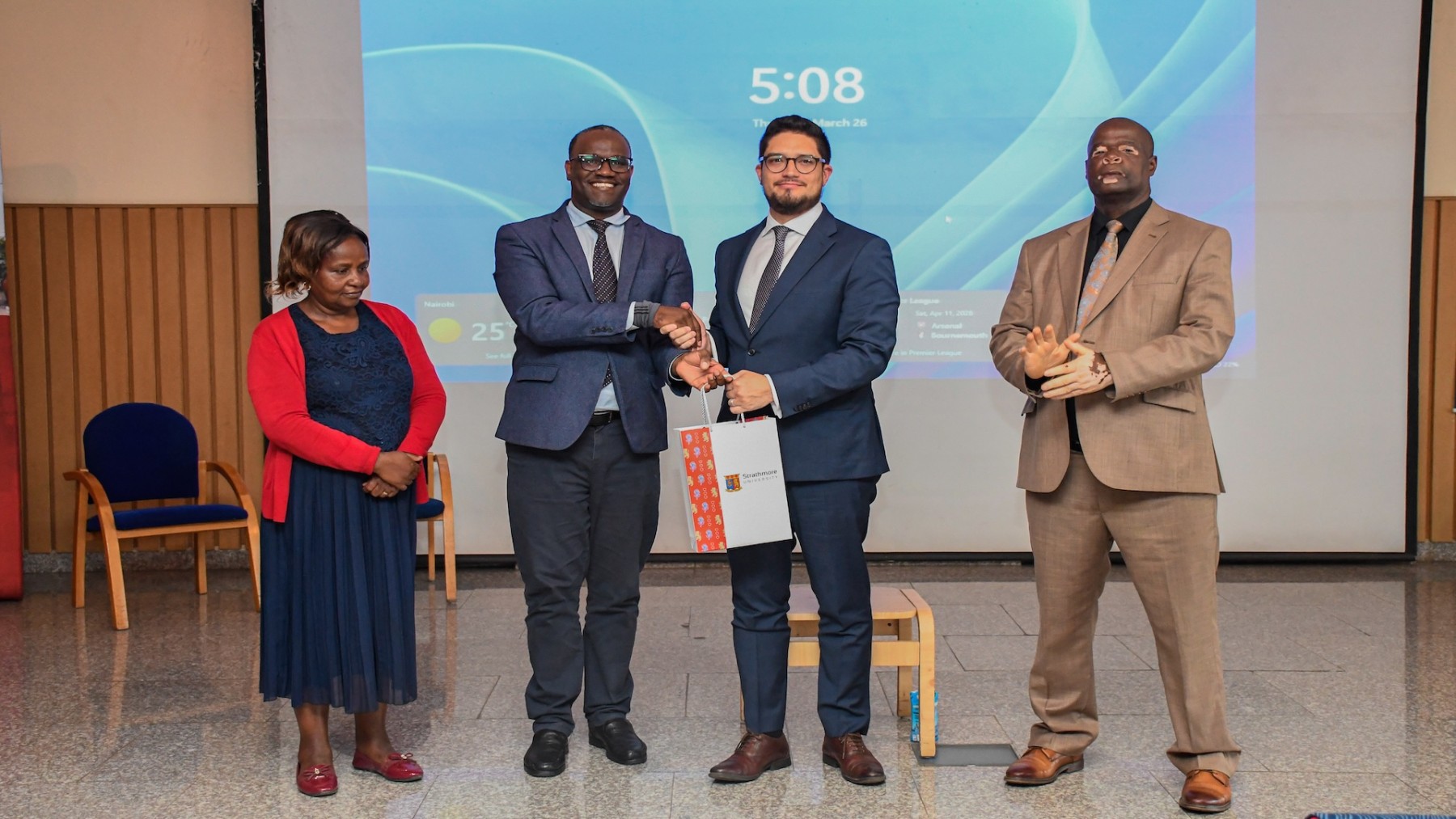
Ms. Mary Mbuga (State Department for Children Services) delivered the Cabinet Secretary’s address and officially declared the workshop open. She set the constitutional frame: the family is enshrined in Article 45 of Kenya’s Constitution as the natural and fundamental unit of society, and the action plan is not a bureaucratic exercise but the discharge of a constitutional obligation. On Day 3, she accepted the proposal to take the draft zero matrix forward through a formal government adoption process — and articulated Kenya’s aspiration plainly: not merely to have a policy, but to become a center of excellence in implementation.
Jane Munuhe (State Department for Children Services) provided the technical backbone of the workshop. On Day 1 she delivered the comprehensive policy overview — laying out all ten thematic areas, naming the implementation gap, and issuing the challenge that framed three days of work. On Day 3 she co-moderated the group sessions that produced the draft matrix, ensuring the outputs were operational rather than aspirational. More than anyone, it was Jane Munuhe who translated the workshop’s energy into a document.
Renata Kaczmarska (UNDESA) opened and anchored the workshop, bringing a decade of UN-level family policy work — Secretary-General reports, regional expert meetings, and General Assembly resolutions adopted by consensus. Her strategic contribution: Kenya’s government has already agreed to these resolutions internationally, making them a powerful lever for domestic accountability. She also led the environment and families session, framing families not as victims of climate change but as active partners — sustainable food producers, responsible consumers, educators, and advocates — and presenting the 10 ‘R’ principles as a practical household-level framework for the action plan.
Dr. Raymond Mutura (Strathmore University / CROWF) served as intellectual anchor and institutional host. As former national chair of the technical working group that designed Kenya’s National Positive Parenting Programme, IFFD Board member, and Director of CROWF — the institution that co-drafted the National Family Policy — he brought unique policy authorship to the room. He managed every session, synthesized every discussion, and on Day 3 set the terms for what happens next: a formal consolidation process led by the State Department for Children Services and CROWF.
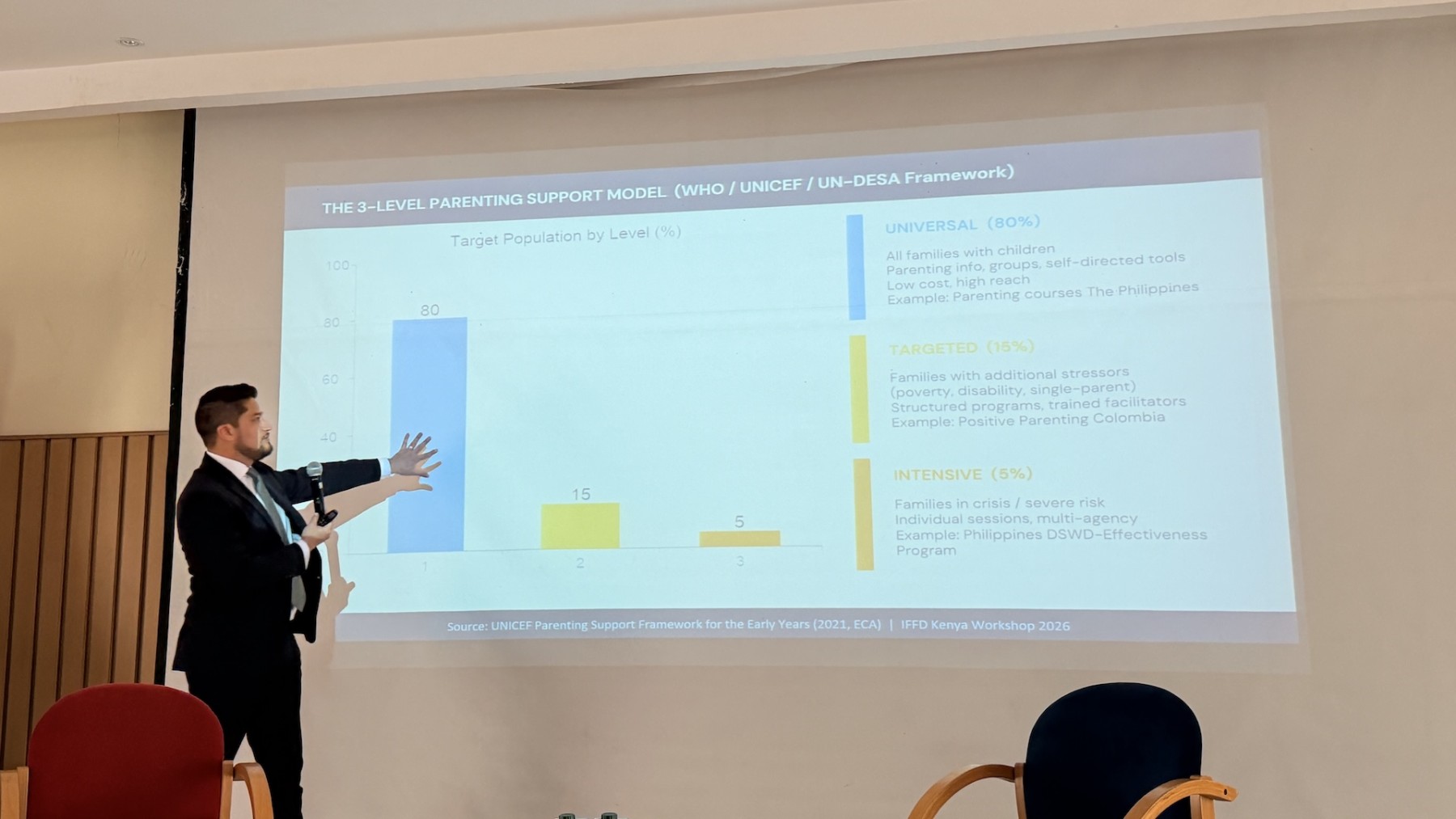
Dr. José Alejandro Vázquez (IFFD) brought fifty years of implementation experience across 68 countries and ECOSOC consultative status at the UN. He presented three country cases — the Philippines’ nationally legislated Parent Effectiveness Service Program, Colombia’s government-NGO co-design model, and Strathmore’s own Programme for Family Development — and introduced the three-level service delivery model (Universal 80%, Targeted 15%, Intensive 5%) that became the action plan’s core architecture. His framing recommendation carries global implications: replace “Family Education” with “Parenting Support through Skill-Building” — strengths-based, aligned with WHO and UNICEF terminology, and proven to generate higher participation.
Dr. Olubusayo Akinola (African Union) spoke on behalf of 55 member states and placed Kenya’s work in its continental frame: Kenya is the reference point for the entire continent. The AU’s own Plan of Action on the Family has not been revised since 2004 — predating the smartphone, social media, and the climate crisis as a daily African reality. A ministerial meeting in Namibia in July 2026 will authorize a comprehensive revision. Kenya’s draft zero will directly inform it. Dr. Akinola was equally candid about the structural failures that have held back continental progress — unreliable data, political volatility, chronic underfunding, and an accountability gap that allows commitments to be made and quietly abandoned. Her honesty gave Kenya’s own challenges their proper continental frame.
Prof. Susan K. Walker (University of Minnesota) delivered three sessions on digital technology and the family, moving from ecological analysis to practical tools to implementation guidelines. Her central finding for policymakers: the children most harmed by technology are those without strong family support systems — strengthening the family relationship is the most effective digital safety intervention. She also identified a critical gap: parenting educators are being left behind while schoolteachers receive technology resources. Investing in educators, not just content, is the prerequisite for any digital strategy to work.
Prof. Zitha Mokomane (University of Pretoria) provided the integrative analytical synthesis, showing through the story of one Kenyan family how demographic change, technological transformation, and environmental pressure intersect in daily life — and why policy must address all three together. She brought two directly actionable proposals: the Family Impact Lens — requiring every government ministry to assess its policies’ impact on families, supported by a dedicated Family Coordinator in each ministry — and a shift from individual-focused to family-focused social protection design, so that when a beneficiary dies or ages out, the family does not fall back into poverty.
Mr. Mopetane Asangama (DRC) brought the perspective of a country of 103 million people only now beginning the policy formulation process Kenya completed over nine years. He presented the DRC’s structured roadmap and spoke candidly about its weaknesses — weak government commitment, insufficient resources, and partner reluctance to fund anything labeled “family.” His most directly relevant observation for Kenya’s dissemination strategy: “If you talk about family, people are reluctant. If you talk about child, they will accept.” The DRC is watching Kenya. So is the rest of the continent.
What the Workshop Produced
The primary output is a Draft Zero Implementation Matrix covering all ten policy thematic areas, with activities, measurable indicators, responsible actors, and draft budgets totaling KES 1.74 billion — acknowledged by all groups as a placeholder requiring further review. A critical principle established by the working groups: every activity that involves “establishing” a centre or programme must include a corresponding operationalization indicator, directly addressing the recurring pattern of initiatives that are launched but never become functional.
The Five Priorities That Emerged
Coordination — a formal structure from national to community level — is the single most cited gap, and the first prerequisite for everything else. Evidence — beginning with a national baseline survey on the status of Kenyan families — is the foundation that makes coordination meaningful. Dissemination of all ten thematic areas across all 47 counties has not yet happened and must begin now. Integration into existing platforms — ECD, health, nutrition, GBV response — is the most cost-efficient path to scale. And prevention must expand to reach young people, teenagers, and pre-marriage couples — before crisis, not only in response to it.
A Moment of Continental and Global Significance
For UN policymakers working on the IYF+30 agenda, Kenya’s action plan offers something rare: a living demonstration of what happens when a government, its universities, its civil society, and its international partners sit in the same room for three days and build something together that none of them could build alone. Kenya’s draft zero will be shared with the AU ahead of the July 2026 Namibia ministerial meeting. The DRC and other African countries are already looking to Kenya as their model. Through the IYF+30 process, Kenya’s experience is available to every UN member state.