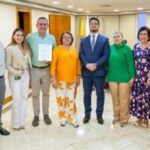

During the 70th session of the Commission on the Status of Women (CSW70), the International Federation for Family Development participated as a speaker in the side event “Intergenerational Solidarity as a Key for Empowering Women in Society,” organized by the Permanent Mission of Hungary to the UN at the United Nations Headquarters in New York. José Alejandro Vázquez, Director of International Relations at IFFD, took part in the panel discussion, contributing the organization’s perspective on how cooperation across generations can support the empowerment of women.

The event brought together government representatives, international experts and civil society organizations to explore the role of intergenerational solidarity in advancing gender equality. In a context marked by demographic change, social challenges and technological transformation, discussions highlighted how relationships between generations shape the opportunities and life trajectories of women and girls. Particular attention was given to persistent structural barriers,
including the unequal distribution of caregiving responsibilities, limited access to decent work and the need for policies that address these issues through a life-course and intergenerational perspective.

In his intervention, IFFD emphasized that accelerating gender equality requires greater attention to how care is organized within families and across generations. The organization called for policies that recognize, reduce and redistribute care responsibilities, as well as greater investment in care infrastructure, parental leave policies that actively involve fathers and improved statistical systems to better measure caregiving dynamics. From this perspective, intergenerational solidarity is not only a social value but also a practical strategy to prevent inequalities from being passed from one generation to the next and to build more inclusive and sustainable societies.