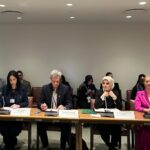

The International Federation for Family Development participated in the 57th session of the United Nations Statistical Commission, held in New York from 3 to 6 March 2026. The Commission, the highest decision-making body for international statistical activities, brought together Member States, international organizations and civil society to discuss key developments in global statistical systems, including social and demographic statistics, data governance and indicators for the 2030 Agenda.
Within this framework, IFFD closely followed discussions related to ageing-related statistics and age-disaggregated data, an agenda item of particular relevance in light of the rapid demographic transformations taking place worldwide. Although civil society organizations were not able to present written comments during the session, IFFD submitted a contribution reflecting on an important dimension that remains insufficiently measured in current statistical systems: the intergenerational networks of care that support older persons and their families.
From IFFD’s perspective, population ageing should not be understood only as an individual demographic trend but as a transformation that unfolds within families and communities. Informal caregivers, often spouses, adult children or even grandchildren, provide essential daily support to older persons. However, these intergenerational caregiving relationships are still not consistently captured in national and international statistical frameworks. Strengthening the measurement of caregiving, including data on the intensity, frequency and type of care provided, would help policymakers design more sustainable long-term care systems, labour policies and social protection mechanisms.
IFFD therefore highlights the importance of integrating caregiving variables into censuses, household surveys and labour force statistics, while ensuring better comparability across countries and stronger statistical capacity at the national level. Developing a more intergenerational statistical lens would allow ageing-related data to reflect the social realities of families as interconnected systems rather than isolated individuals. As demographic change accelerates, improving how societies measure and understand care will be essential to building inclusive and resilient policies that promote dignity, autonomy and solidarity across generations.