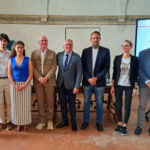


 Generalitat Valenciana and IVASS join forces with IPC Paris students to strengthen inclusive social services and address the growing challenge of addictions and digital risks.
The Institut Valencià d’Atenció Social-Sanitària (IVASS), the public body of the Generalitat Valenciana responsible for social services provision, has launched a new international cooperation initiative aimed at reinforcing inclusive public policies for vulnerable populations. Within this effort, a group of students from IPC – Facultés Libres de Philosophie et de Psychologie (Paris) have joined IVASS through the Erasmus+ mobility programme, supported by the International Federation for Family Development (IFFD), which holds consultative status with the United Nations.
The students will support IVASS teams in Valencia over the summer in efforts that contribute to the design, analysis, and improvement of community-based social services, with particular attention to addiction prevention, technological impacts on mental health, and the social reintegration of affected individuals and families. During the official presentation of the initiative, María José Rico, Director General of IVASS, emphasized the Generalitat’s “firm commitment to the most vulnerable populations” and the need to “build inclusive public policies that promote the quality of life of all people, especially those at risk of social exclusion.”
She highlighted the growing impact of addictions, noting that these issues “not only affect individuals but also destabilize families, communities, and entire social systems.” Rico stressed the urgent need for integrated responses that combine prevention, treatment, regulation, and scientific research, particularly in the face of emerging behavioral addictions linked to digital technologies, online gaming, and early substance use among youth.
The participating IPC students will assist in mapping service access, developing communication tools for awareness campaigns, and supporting community-based workshops and field research focused on digital literacy, emotional wellbeing, and resilience.
“This initiative reflects IVASS’s broader vision to combine technological innovation with a human-centered approach to social care,” said Rico. “Digital platforms, mobile apps, and data analytics can be powerful allies in preventing and treating social challenges—but only if managed responsibly and with attention to their psychosocial impact.”
Rico reaffirmed the Generalitat’s commitment to ELISAN, the European Local Inclusion and Social Action Network, currently chaired by Vice President Susana Camarero, and referenced the Venice Declaration of the Inclusive Cities and Sustainable Families Project of IFFD as a strategic roadmap for advancing inclusion, equity, and social health in Europe and beyond.
With this collaboration, IVASS continues to position itself as a key actor in the international social development space, integrating academic knowledge, youth engagement, and evidence-based policymaking to respond to evolving social challenges—ensuring that no one is left behind.
More info:
https://www.ivass.gva.es/es/Actualitat/Actualitat-detall.html?name=Estudiantes_franceses
https://www.ivass.gva.es/es/Actualitat/Actualitat-detall.html?name=TRIESTE